

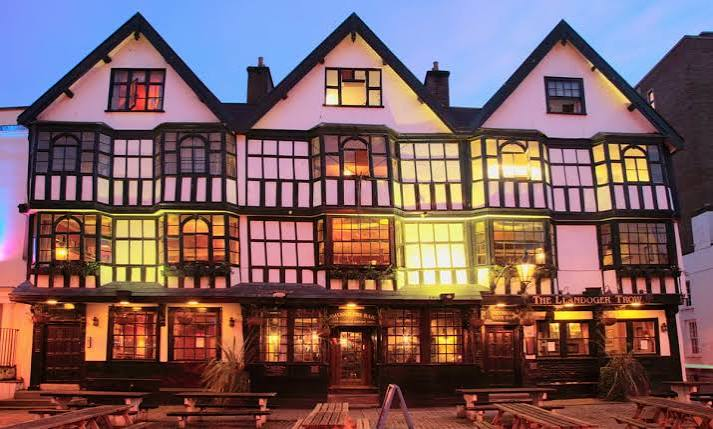
This is the third and final pirate-themed case I've written about this week. I'll admit this one has the weakest connection. Unlike the Black Pearl and Blackbeard cases, there are no pirates in the opinion itself. Instead, the link is geographic: Bristol, England was the departure point for the voyage in Robert Louis Stevenson's Treasure Island. Sometimes that's enough of an excuse to end a pirate trilogy.
Summary:
In Bristol Springs Custom Homes, LLC v. Argo Group US, Inc., the Fourth Circuit affirmed summary judgment in favor of an insurer and its claims administrator, rejecting claims that the insurer's handling of a construction-defect lawsuit constituted breach of contract or bad faith under West Virginia law.
The underlying dispute arose after homeowners sued Bristol Springs over allegedly defective construction. Bristol sought coverage under its commercial general liability policy. The insurer agreed to provide a defense, but under a reservation of rights, taking the position that significant portions of the claims might ultimately fall outside policy coverage.
Settlement negotiations were complicated from the outset. Before trial, the homeowners reduced their demand from $450,000 to $150,000 if Bristol would dismiss its own $100,000 counterclaim. Bristol refused, the case proceeded to trial, and the jury returned a $325,000 verdict against Bristol while rejecting its counterclaims.
After the verdict, negotiations continued. The homeowners demanded approximately $391,000 in exchange for a complete resolution, including abandonment of post-trial motions and appeal rights. Before that settlement could be completed, however, Bristol filed Chapter 11 bankruptcy.
The bankruptcy filing materially changed the negotiations. Appeal rights and litigation claims became property of the bankruptcy estate, meaning the insurer could no longer simply negotiate away those rights without bankruptcy court approval. The insurer repeatedly asked Bristol and its bankruptcy counsel how settlement could proceed under these new circumstances, emphasizing that it remained willing to fund a reasonable settlement. According to the record, Bristol never meaningfully responded to those requests. Ultimately, the insurer agreed to pay the homeowners' settlement demand, subject to approval by the bankruptcy court, which approved the settlement.
Despite that resolution, Bristol sued its insurer, contending that the insurer's earlier handling of the claim had been unreasonable and had forced the company into bankruptcy.
The Fourth Circuit disagreed.
Regarding West Virginia's Hayseeds doctrine—which allows successful insureds in certain first-party coverage disputes to recover attorneys' fees and consequential damages—the court concluded Bristol could not establish that its attorneys' efforts were actually necessary to obtain the settlement. Under West Virginia precedent, simply filing suit is not enough; the insured must show that "but for" counsel's efforts the settlement would not have occurred.
The record showed something different. Bristol declined opportunities to settle before trial, and after filing bankruptcy it failed to engage with the insurer's repeated requests to discuss how settlement could proceed despite the bankruptcy complications. The court observed that there was little evidence Bristol ever actually demanded that the insurer accept the homeowners' settlement demand or otherwise proposed a workable path toward resolution. Those facts defeated the Hayseeds claim.
The Fourth Circuit also affirmed dismissal of Bristol's statutory bad-faith claims under the West Virginia Unfair Trade Practices Act, agreeing with the district court that the statutory provisions relied upon simply did not apply to claims asserted by an insured against its own insurer under the circumstances presented.
Commentary:
Although this is fundamentally an insurance case, bankruptcy practitioners will immediately recognize how dramatically a bankruptcy filing can alter ongoing settlement negotiations.
Once a bankruptcy petition is filed, litigation claims, appeal rights, and settlement authority frequently become subject to the Bankruptcy Code and bankruptcy court oversight. Parties who may have been close to settlement one day can suddenly find themselves navigating entirely different legal constraints the next.
The opinion also illustrates something bankruptcy lawyers regularly tell clients: filing bankruptcy does not eliminate the need to cooperate with ongoing litigation strategy. Here, the Fourth Circuit repeatedly emphasized that the insurer sought guidance about how settlement could proceed after the bankruptcy filing and that Bristol failed to meaningfully engage in those discussions. That absence of cooperation became an important part of the court's reasoning.
The case is also a reminder that bad-faith claims are highly dependent on the governing state's law. West Virginia's Hayseeds doctrine provides important protections for insureds, but those protections are not automatic. An insured still bears the burden of demonstrating that counsel's efforts were actually necessary to obtain the insurance benefits and that the insurer—not the insured's own litigation decisions—was responsible for the failure to resolve the claim sooner.
Finally, for bankruptcy attorneys representing debtors involved in pending litigation, this opinion underscores the importance of early coordination among bankruptcy counsel, litigation counsel, insurers, and bankruptcy trustees. Once bankruptcy intervenes, settlement authority often becomes considerably more complicated, and silence or inaction can have significant consequences later if disputes arise over who prevented a settlement from occurring.
Not every treasure map leads to buried gold. Sometimes, as this third and final pirate-themed case demonstrates, it leads instead to a reminder that communication—and cooperation—remain among the most valuable assets parties can bring to litigation.
Blog comments