

Available at: https://doi.org/10.59576/lse.20260512
Abstract:
During 2026:Q1, household debt balances increased slightly, by $18 billion, to reach $18.8 trillion, according to the latest Quarterly Report on Household Debt and Credit from the New York Fed’s Center for Microeconomic Data. Amid upticks in mortgage, HELOC, and auto balances and a seasonal decline in credit card balances, student loan balances remained unchanged. However, the share of student loan balances past due increased, nearing prepandemic levels at just over 10 percent. In this post, we focus on which borrowers entered default on their federal student loans over the past two quarters. We find that the average borrower entering default is nearly 40 years old, was not past due on their student loans prior to the pandemic, and is more likely to live in the South. While defaulted borrowers are more likely to be past due on other forms of debt, the overall scope of student loan defaults is still relatively low, suggesting that fears of broader contagion to other credit products are premature.
New York Fed: Student Loan Defaults Return — And the South Is Getting Hit Hardest
The latest report from the New York Federal Reserve confirms what many consumer bankruptcy attorneys have been seeing anecdotally for months: the “return to repayment” for federal student loans has rapidly become the return to default.
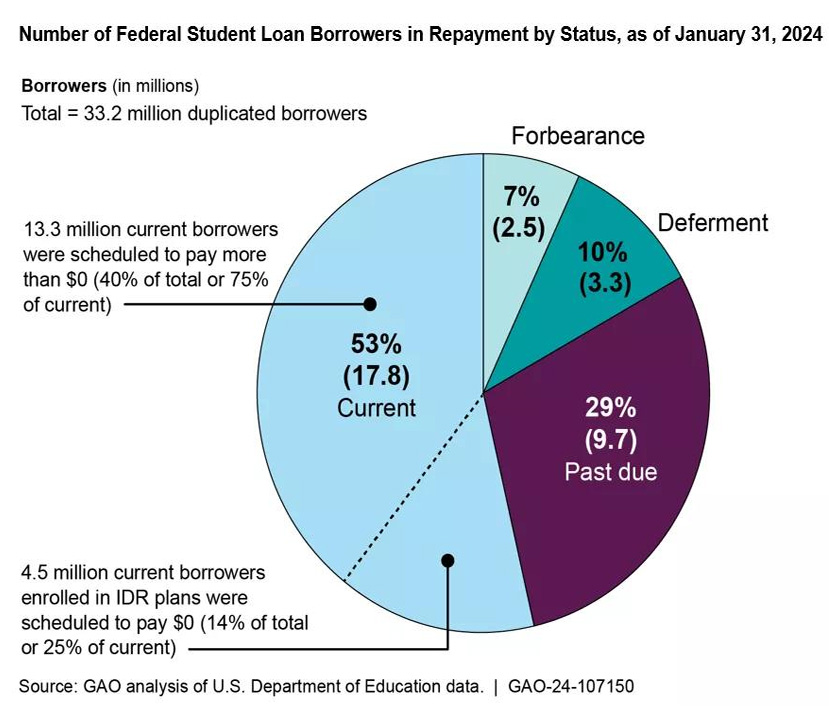
After years of pandemic-era payment pauses, interest suspensions, and the temporary “on-ramp” period that suppressed credit reporting consequences, defaults are now appearing in force. According to the New York Fed, approximately 1 million federal student loan borrowers defaulted in 2025:Q4, followed by another 2.6 million borrowers in 2026:Q1 alone.
Perhaps most strikingly, the defaults are heavily concentrated in the South — including North Carolina’s neighboring states and much of the traditional consumer-bankruptcy belt.
New Student Loan Defaults Are Concentrated in the South
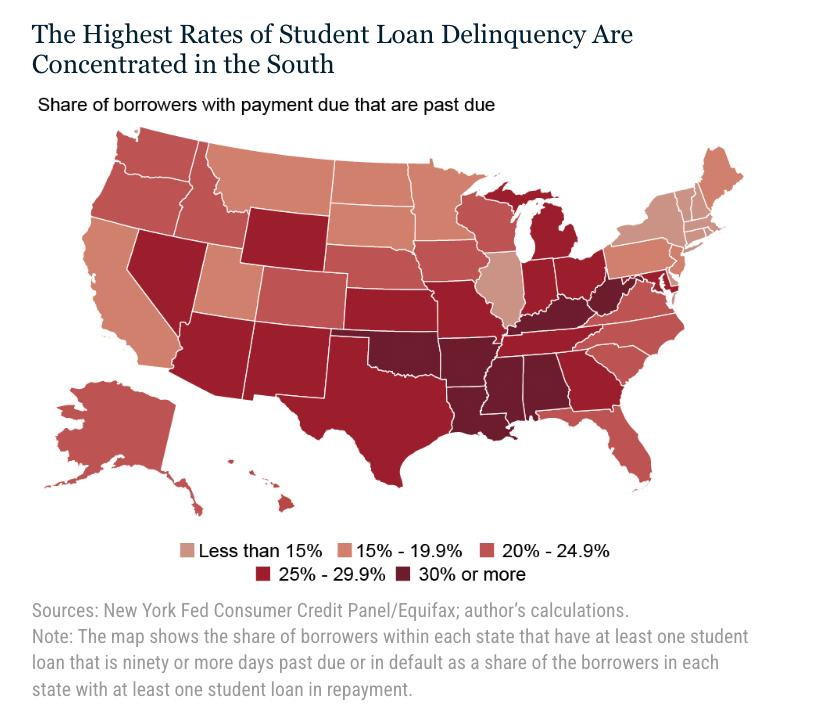
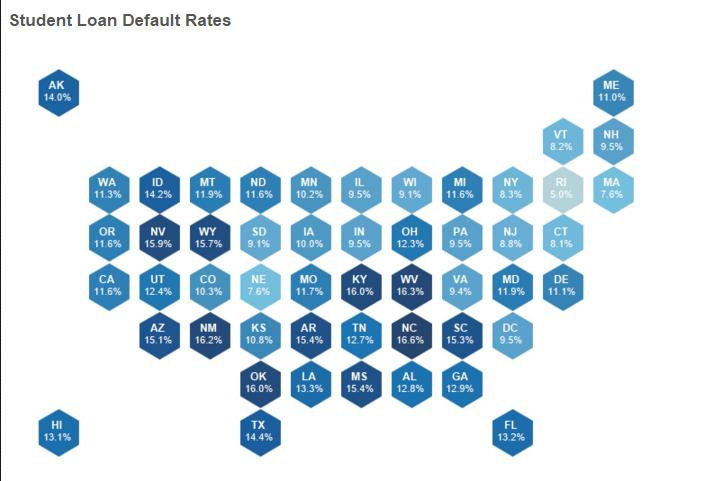
The New York Fed found that Louisiana, Mississippi, Alabama, Georgia, and South Carolina each had more than 10% of student loan borrowers newly default.
That should not surprise anyone practicing consumer bankruptcy in the Southeast. These are states with lower median incomes, weaker social safety nets, and often relatively low exemption protections. They are also states where many borrowers were already financially fragile long before student loan payments restarted.
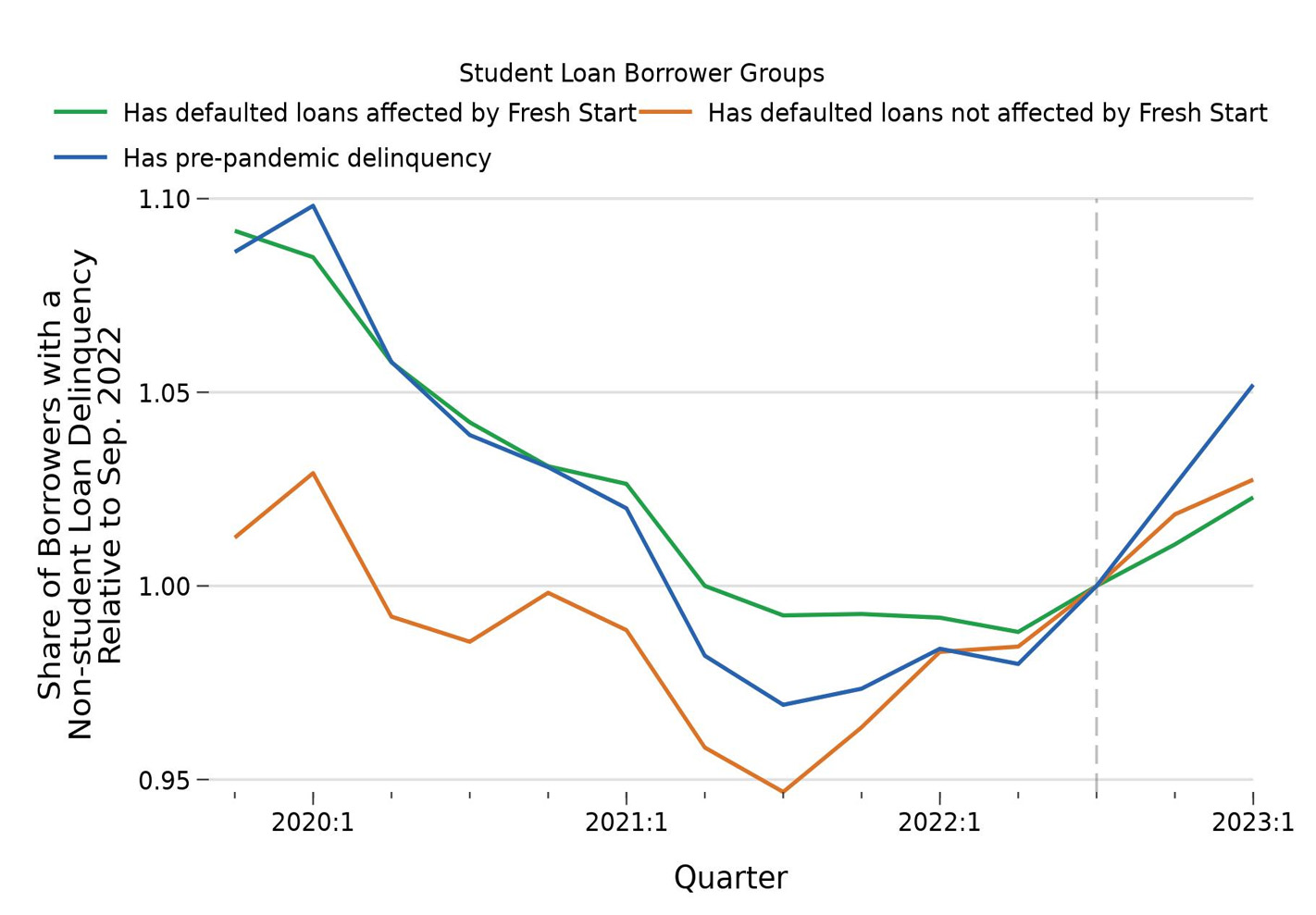
More troubling is that these defaults are not primarily limited to borrowers who were already chronically delinquent before the pandemic. The report notes that more than three-quarters of newly defaulted borrowers were either current before the pandemic or did not yet have a payment due at that time.
This is not simply the same old distressed population resurfacing. Instead, the repayment restart appears to have pushed a much broader swath of borrowers into financial collapse.
The New York Fed also found that the average newly defaulted borrower is now nearly 40 years old, with significantly increased distress among borrowers over 50. Student loans are no longer merely a “young graduate” problem. They increasingly resemble a permanent middle-age financial burden.
And the broader financial implications are severe. Among newly defaulted borrowers:
-
Nearly 40% of those with auto loans are delinquent;
-
56% of credit-card holders are delinquent; and
-
20% of mortgage borrowers are delinquent.
Those numbers look less like isolated student loan distress and more like the early stages of widespread household insolvency.
Collections Have Not Fully Restarted Yet
Importantly, the pain reflected in these numbers may still understate what is coming.
As the New York Fed notes, full federal collection efforts on defaulted student loans remain suspended for now. But eventually, administrative wage garnishment of up to 25% of disposable pay, Treasury offsets, and seizure of tax refunds will likely resume.
Politically, it is difficult to imagine aggressive student loan collections resuming before the mid-term elections, since both political parties continue trying to use student loan policy to attract voters. But after the elections, the pressure to restart federal collections may increase substantially.
When that occurs, many borrowers may discover that the various revised repayment programs — including the RAP plan — are either ineffective or simply unaffordable in practice.
Chapter 13 May Be the Best IDR Available
Ironically, one of the most powerful income-driven repayment programs currently available may be Chapter 13 bankruptcy itself.
Following the dismissal of Missouri v. Trump after the effective termination of most — though not all — of the SAVE Plan, the injunction blocking implementation of the remaining Biden-era regulations ended as well. That means 34 C.F.R. § 685.209(k)(4)(iv)(K) became effective.
Under that regulation, each month in which a debtor makes Chapter 13 plan payments on or after July 1, 2024 and before June 30, 2028 automatically counts toward IDR and PSLF forgiveness credit.
That is a potentially enormous development.
And importantly, the credit accrues regardless of:
-
how much is actually distributed toward student loans through the plan;
-
whether the debtor separately maintains direct IDR payments; or
-
whether the Chapter 13 plan contains special “Buchanan language.”
For many debtors, Chapter 13 may effectively function as the most affordable and comprehensive IDR option available because the Means Test and Disposable Monthly Income analysis evaluate actual living expenses far more thoroughly than non-bankruptcy repayment systems driven largely by gross income figures.
(Hence the name: “Disposable Monthly Income.”)
A debtor struggling with housing, transportation, taxes, childcare, insurance, medical costs, or secured debt payments may often obtain a far lower functional payment obligation in Chapter 13 than under administrative student loan repayment programs.
Indeed, debtors whose Chapter 13 plans require distributions to unsecured creditors due to the hypothetical liquidation requirement may still find that a non-bankruptcy IDR payment would be lower than the prorated portion student loans receive through the plan. But even in those cases, Chapter 13 can provide broader relief:
-
stopping collections,
-
preventing garnishments,
-
protecting tax refunds,
-
stabilizing mortgages and vehicles,
-
and simultaneously earning forgiveness credit month-by-month.
That increasingly makes Chapter 13 not merely a debt-adjustment device, but a long-term student loan management strategy.
The New York Fed report strongly suggests that the coming years may see exactly that shift.
To read a copy of the transcript, please see:
Blog comments